
September 23, 2026 · 6-min read
What to Write in a First Responder Thank-You Card
A few honest words can remind someone who serves that their steady presence has been seen.
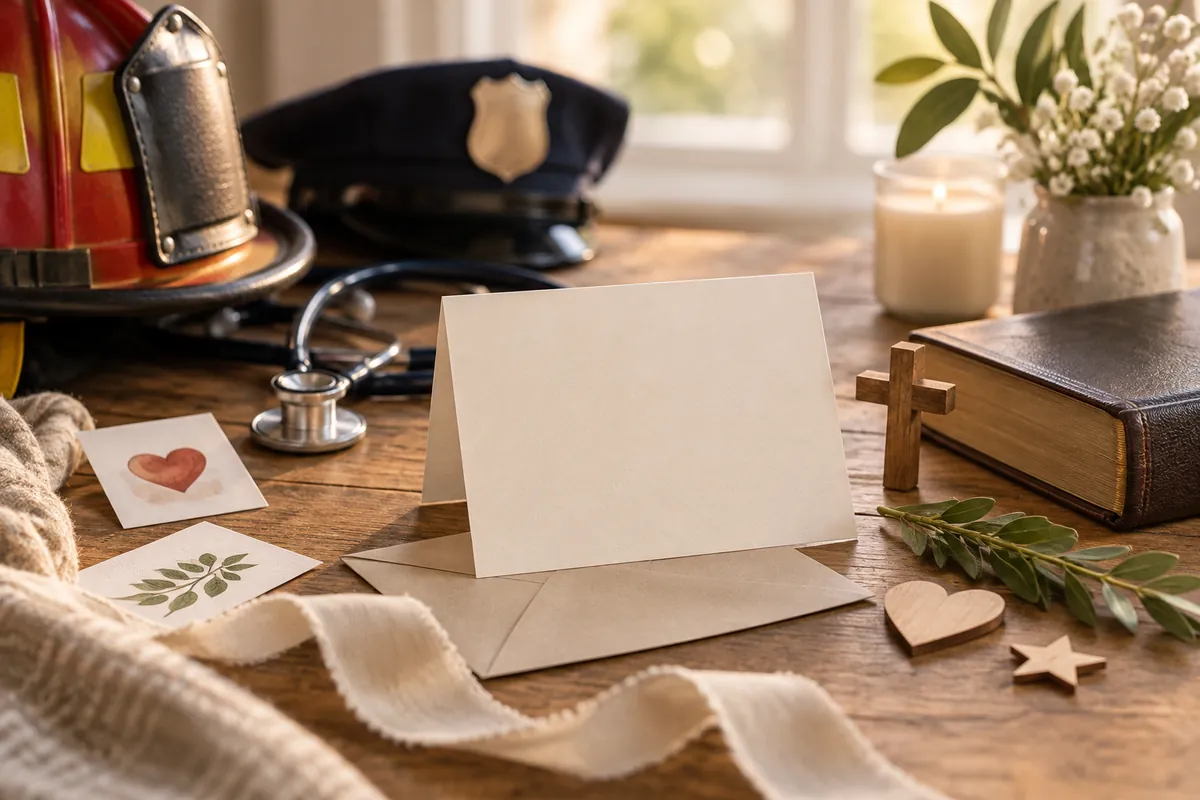
What to write in a first responder thank you card comes down to one thing: let them know their service was noticed. Thank them plainly, name the courage or care you saw, and offer a few sincere words of encouragement.
First responders often arrive when someone else’s day has become frightening, painful, or uncertain. A card does not need to capture everything they carry. It only needs to say, with care, “Your presence mattered.”
What should a thank-you card include?
The most meaningful notes are usually specific without being overly detailed. You do not need to know the responder well, and you do not need polished language.
Include one or two of these elements:
- A direct thank-you for their service
- A specific quality you noticed, such as calmness, patience, courage, or kindness
- A brief mention of how they helped you, your family, or your community
- A wish or prayer for their safety and peace
- Your name or your family’s name, especially if they may remember the situation
Try not to feel pressure to explain the whole event. If the situation was difficult, a few simple words can be especially welcome.
For example: “Thank you for the calm way you cared for our family when we were scared. We will not forget your kindness.”
What can I write to a firefighter?
Firefighters serve in visible emergencies and in quieter moments that still matter deeply. A good message can recognize both their courage and their willingness to step toward danger when others need help.
Short firefighter thank-you messages
- Thank you for serving our community with courage and care.
- We are grateful for the steady, brave work you do every day.
- Thank you for being willing to answer the call, no matter the hour.
- Your service brings comfort to people in frightening moments.
- Thank you for protecting others with such strength and compassion.
More personal wording
“Thank you for coming when our family needed help. Your calm presence gave us reassurance at a time when we did not know what to do. We are deeply grateful.”
“Your work asks a great deal of you, and we want you to know it is seen. Thank you for serving our neighbors with courage and patience.”
What do I write to a paramedic or EMT?
For paramedics and EMTs, it can help to acknowledge the gentleness and skill they brought into a stressful moment. They may have cared for someone you love during a time that felt rushed, confusing, or vulnerable.
You might write:
- Thank you for the care you gave when we needed it most.
- Your calm words and quick help made a hard moment easier to bear.
- We are grateful for your skill, compassion, and steady presence.
- Thank you for treating our loved one with such dignity and kindness.
- Your work brought comfort to our family when we were afraid.
A longer note could say: “Thank you for caring for my father with such patience and respect. In a moment that felt overwhelming, you helped our family feel less alone. We are thankful for the work you do and the kindness you showed.”
If you are also looking for a thoughtful way to support someone who works in healthcare, this guide to packing a hospital bag for the nurse in your life may offer a few gentle ideas.
How can I thank a police officer?
A thank-you note for a police officer should be respectful, personal, and measured. You can acknowledge the responsibility of their work without making assumptions about their experience.
Consider these card messages:
- Thank you for serving our community with dedication and integrity.
- We appreciate the care and professionalism you showed our family.
- Thank you for being present when we needed help.
- Your patience and clear guidance brought comfort in a difficult situation.
- We are grateful for the responsibility you carry on behalf of others.
For a note after a specific interaction, try: “Thank you for taking the time to listen and help us understand what to do next. Your professionalism and kindness made a real difference to our family.”
What if I do not know them personally?
A community thank-you is still worth giving. First responders may hear from people only when something has gone wrong. A note that recognizes their ongoing service can be a quiet reminder that their work has value beyond any single call.
Keep it broad, but warm:
“Thank you for the ways you serve people you may never know. Our community is stronger because you are willing to show up in hard moments.”
“Thank you for your commitment, your courage, and the care you give to others. We are grateful for you and are praying for your safety.”
Psalm 46:1 says, “God is our refuge and strength, a very present help in trouble.” If it fits your relationship and the card’s tone, this verse can be a gentle addition. A simple promise to pray for protection, rest, and peace is also meaningful.

What should I avoid writing?
Kind intentions can sometimes place an unexpected burden on the person receiving the card. Keep the focus on gratitude rather than on asking them to revisit hard experiences.
Avoid:
- Asking for details about an emergency or call
- Saying you know exactly how their work feels
- Making light of danger, trauma, or loss
- Writing something that expects a reply
- Using very general praise without any personal warmth
You do not need to make the note heavy to make it meaningful. “Thank you for being there” can carry real weight when it is offered sincerely.
How do I make the message feel personal?
One small detail is enough. Think about what stayed with you after the responder left: a reassuring voice, the way they spoke to a child, a patient explanation, or the fact that they arrived quickly when help was needed.
Use this simple structure:
- Thank them directly.
- Mention what you noticed.
- Share the difference it made.
- Close with a kind wish or prayer.
Here is an example:
“Thank you for showing such care during a difficult moment for our family. Your calm voice and steady help gave us comfort when we needed it most. We are grateful for you and praying that you are protected and encouraged in your work.”
Is a small keepsake appropriate?
A handwritten card is often enough, especially after a personal emergency. For a station, department, workplace team, or appreciation event, a small faith-centered keepsake can add a lasting note of gratitude.
If you would like something simple to give alongside your message, Thank You For Showing Up is a printable card created to honor the steady service of first responders. It leaves room for your own words, which are often the part they remember.
Frequently asked questions
- What do you say to thank a first responder?
- Thank them for their service, name the difference their presence made, and keep your words honest. A brief personal memory often means more than a long message.
- Should I mention a difficult call in a thank-you card?
- You can mention it gently if it affected you personally, but avoid asking for details or making the responder relive it. Focus on their care, calmness, or kindness.
- What Bible verse is appropriate for a first responder?
- Psalm 46:1 is a thoughtful choice because it speaks of God as a refuge and strength in trouble. You can also simply write that you are praying for their protection and peace.
- Can I thank a first responder I do not know personally?
- Yes. A respectful note from a community member can be deeply encouraging. Thank them for showing up for others and acknowledge the quiet weight of their work.
- first responder gifts
- thank you card
- firefighter appreciation
- paramedic gifts
- christian gifts
Related reading
- What to Give a Farmer as a Thank-You GiftA thank you gift for a farmer can honor their steady work, care for the land, and the people they feed.
- What to Write on a Confirmation Banner: Words That FitSimple, ready-to-use wording for what to write on a confirmation banner, from a name and date to a short verse or blessing.
- What to Write on a Baptism Banner: Words That FitNot sure what to write on a baptism banner? Here are simple, sincere phrases and wording examples that fit any baptism celebration.