
July 17, 2026 · 6-min read
What to Say When You Meet Your New Grandbaby's Godparents
A few honest words at that first meeting can set the tone for a relationship that lasts your grandbaby's whole life.
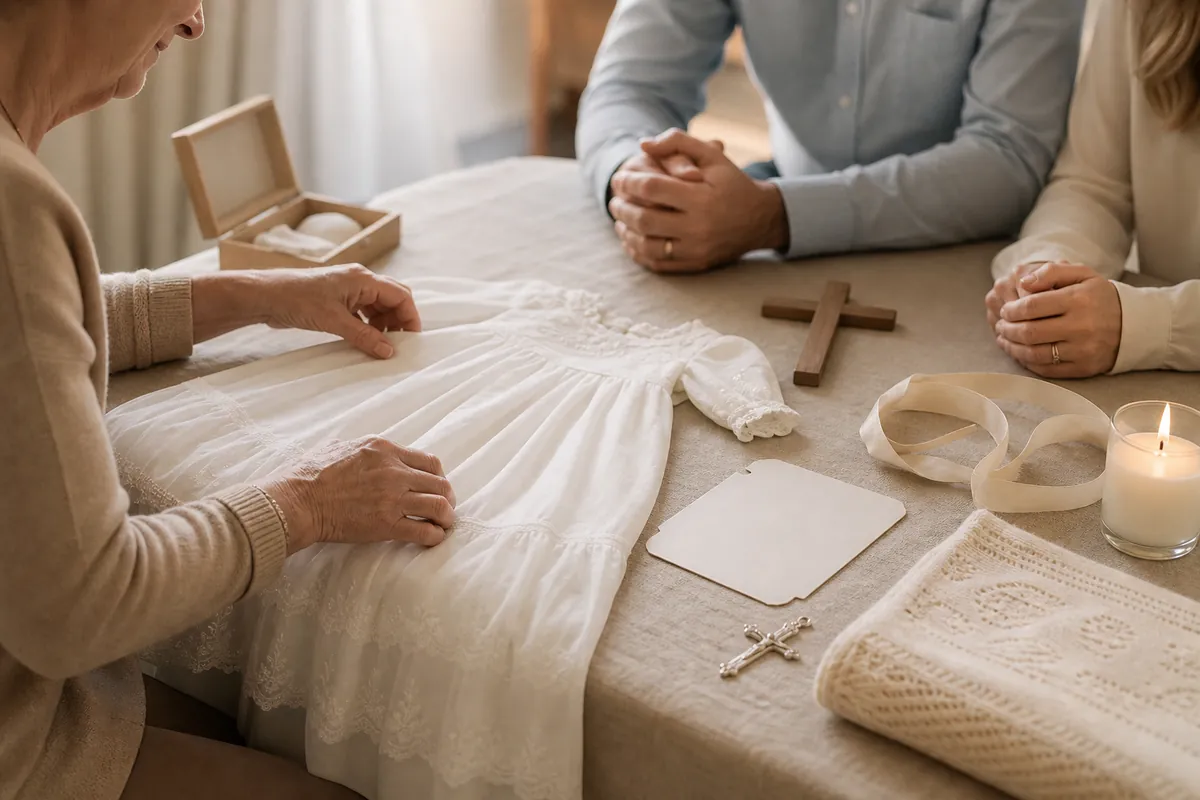
A godparent's job at a baptism is to stand publicly with the parents, make promises on the child's behalf (or affirm the parents' promises), and commit to supporting the child's faith and character as they grow up. In most Christian traditions, this means answering questions during the ceremony, sometimes holding the baby, and agreeing to help guide the child if the parents are ever unable to.
That's the short answer. What actually matters, though, is what happens before and after that one ceremony — starting with the moment you first sit down with the people your child or grandchild has chosen for this role.
What does a godparent do at a baptism?
During the service itself, a godparent typically:
- Stands beside the parents at the front of the church
- Answers or affirms specific vows about raising the child in the faith
- May hold the baby during part of the rite
- Signs the baptismal certificate as a formal witness
Afterward, the role becomes less ceremonial and more relational. Godparents are asked to take a genuine interest in the child's life — checking in, remembering birthdays, and being a steady adult presence beyond the parents. It's less a title and more a quiet, ongoing promise.
What should I say when I first meet the godparents?
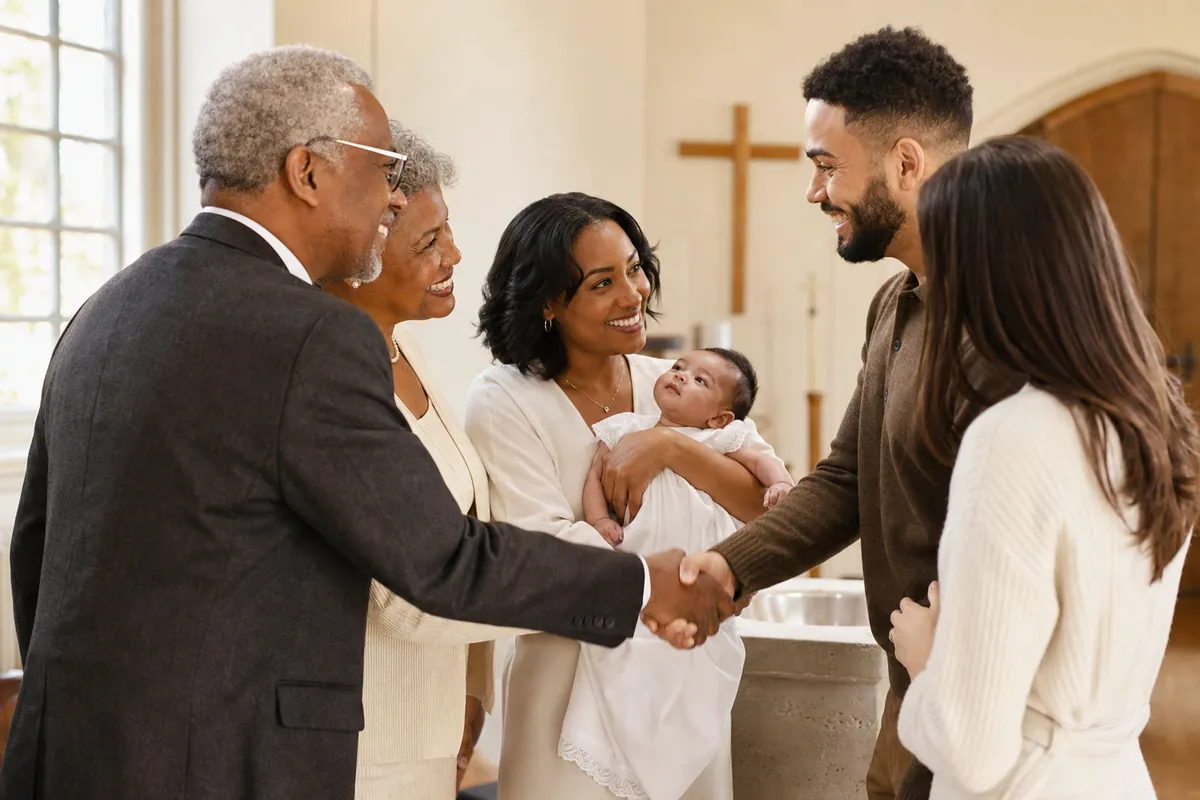
You don't need a speech. A grandparent or parent meeting the chosen godparents for the first time mostly needs to do two things: welcome them and be plain about what the role means to your family.
A few honest openers that work well:
- "We're so glad you said yes. This means a lot to us."
- "We'd love for you to be part of the big moments, not just the day itself."
- "If you ever have questions about what we're hoping for, just ask us directly."
If you're the grandparent and not the parent, it helps to name that clearly: "I'm not stepping into your role, I just wanted to meet you and tell you how grateful I am." That one sentence removes any awkwardness about who's in charge of the relationship going forward.
How do I choose the right godparents?
If you're the parent still deciding, think less about who you like most and more about who will actually show up over years, not just for one afternoon.
Questions worth asking yourself:
- Does this person share, or at least respect, the faith we want our child raised in?
- Have they shown up consistently for us in the past, not just for big events?
- Would our child be safe and loved with them if something happened to us?
- Do they live close enough, or care enough, to stay genuinely connected?
There's no perfect candidate. Most families land on people who are imperfect but reliable, kind, and willing.
What should I ask potential godparents before deciding?
Before you ask someone to say yes, it helps to be specific about what you're hoping for. Vague requests lead to vague commitments.
Consider asking directly:
- "Are you comfortable making promises about faith at the ceremony?"
- "Would you be open to a yearly visit or call around the anniversary of the baptism?"
- "If anything ever happened to us, would you be willing to help raise our child?"
Most people are moved to be asked. Giving them the real shape of the commitment, rather than a vague honor, lets them say yes with their eyes open.
What do godparents actually say during the ceremony?
The exact wording depends on your denomination, but most services ask godparents to affirm something close to a promise to reject wrongdoing, profess faith, and support the child's Christian upbringing. Your officiant will walk everyone through the exact responses beforehand, so there's no need to memorize anything in advance.
If you're writing a card or note to the godparents ahead of the day, our post on what to write in a baptism card has simple, sincere wording you can borrow or adapt.

What if the godparents live far away?
Distance doesn't disqualify anyone. What matters more is intention. Encourage the godparents to pick a few fixed touchpoints, a birthday call, a note at Easter, a visit once a year, rather than trying to be present all the time.
Scripture offers a gentle frame for this kind of long-distance faithfulness: "And let us not grow weary of doing good, for in due season we will reap, if we do not give up" (Galatians 6:9). Presence over years, even from a distance, is still presence.
A small way to mark the day
Many families like to give the godparents, or the child, something that records who stood up that day and why. If you're looking for a simple way to do that, our baptism keepsake print called "On Your Baptism Day" gives space for the date, the names of the godparents, and a short blessing, so the details of the day aren't lost to memory. You can browse the full shop if you'd like to see other faith-milestone keepsakes too.
However you mark it, the most important part happens off the page: a real conversation, honestly welcoming the people who've agreed to walk alongside your child.
Frequently asked questions
- Can godparents be non-religious?
- Many families choose a mix of faithful mentors and close loved ones, but some churches require godparents to be baptized and confirmed members. Ask your officiant about your specific parish or congregation's requirements before finalizing your choice.
- How many godparents can a baby have?
- Most traditions allow one or two, often a godmother and a godfather, though some parishes permit more. Check with your church, since rules vary by denomination and even by parish.
- Do godparents have to attend every birthday or holiday?
- No. The role is about long-term spiritual presence, not a fixed schedule of visits. A phone call, a letter, or a small remembrance on meaningful dates matters more than perfect attendance.
- What if we choose godparents who live in another state?
- Distance does not disqualify someone. Many godparents build the relationship through calls, letters, and visits timed around milestones rather than daily proximity.
- What do godparents typically give as a baptism gift?
- Common gifts include a christening gown or outfit, a small cross or medal, a children's Bible, or a keepsake print the family can hang and keep for years.
- baptism
- godparents
- christening
- grandparents
- faith milestones
Related reading
- What to Say When Someone Thanks You for Their Baptism GiftHow to respond when someone thanks you for a baptism gift, with simple wording for cards, texts, calls, and social media.
- What to Write on a Confirmation Banner: Words That FitSimple, ready-to-use wording for what to write on a confirmation banner, from a name and date to a short verse or blessing.
- What to Give a New Godmother or Godfather (Not the Baby)A clear guide to choosing a gift for godmother or godfather at baptism, with ideas, budget guidance, and card wording.